


Water in Wine: Beyond Consumption, Toward Impact

Carbon has dominated the climate conversation in wine for years. Water deserves its place at the center of the conversation too, especially as wineries face growing water stress with more erratic weather, rainfall, and soil patterns.
As part of our Knowledge Exchange Seminar series for IWCA member wineries, we brought together experts to explore what a complete approach to water management can look like. Marta Mendonça and Cristina Crava of the Porto Protocol presented findings from their report Saving Every Drop in Wine alongside lead author Jihany Brecci of STELLA PIETRO Vineyards, while Rita Khazzaka of IWCA Member Château Ksara shared how the winery is tackling water challenges on the ground in Lebanon.
Beyond considering just water use
In almost every conversation the Porto Protocol has with vintners around the world, water comes up. But as Marta Mendonça shared, those conversations have often focused on water consumption, and that's only part of the picture. The industry also needs to understand water impact: where water comes from, where it goes, and what happens after it's been used.
Total annual rainfall, for example, tells us very little on its own. As Jihany Brecci explained, the same volume of rain can infiltrate slowly into healthy soil and become available to vine roots… or, it can arrive in one intense event, causing runoff and erosion and putting pressure on downstream communities. “When and how the rain falls matters as much as how much rain falls,” she underlined.
Water accounting
This context also matters for measurement. In this way, water behaves differently from carbon when it comes to accounting. A tonne of CO₂ has a global impact regardless of where it is emitted. In contrast, the consequences of water use depend heavily on context. “One cubic meter extracted during a drought from an overdrawn aquifer does not carry the same consequences as one cubic meter used during a rainy season in a water-abundant catchment,” Jihany noted. That means water measurement should account for these contextual factors.
That said, for IWCA members already measuring GHG emissions, much of the basic infrastructure of accounting is familiar. Data systems, lifecycle boundaries, and supplier engagement can all support water accounting too. The difference is in that additional context: the basin, the season, the source, and the quality of the water returned to the system.
The soil is the vineyard’s first reservoir
As the Saving Every Drop in Wine report discusses, the water conversation is often about land. Soil structure, root systems, vegetation, and landscape design all affect how much water is retained in the vineyard and how much is lost as runoff.
This is the thinking behind regenerative hydrology: slowing water down, spreading it, and allowing it to infiltrate the landscape rather than running off. IWCA members shared how they have applied these practices through their vineyard layout, for instance, to follow the natural flow of water and improve retention. (We highly recommend you dive into the full Porto Protocol report for additional field practices and insights!).
What water management looks like in practice at Château Ksara, Lebanon
At Château Ksara, water scarcity isn’t a future scenario. It's very much already affecting every part of winery operations.
Water has always been the winery's greatest asset. When Jesuit fathers founded Château Ksara in 1857, they chose the site in Lebanon’s Bekaa Valley partly because a natural spring flowed there year-round.
But today, that spring runs dry for six to seven months of the year.
Rita Khazzaka shared that the region has experienced rising temperatures and declining precipitation over recent decades. Snow on the surrounding mountains, which once melted gradually and replenished groundwater through spring and summer, can now disappear as early as May. 2025 was the driest season in Château Ksara’s recent history, and the winery saw measurable impacts on grape yields and wine volume per tonne of fruit harvested.
The winery has adopted a suite of strategies to adapt:

Wastewater treatment. Ksara operates a biological wastewater treatment plant capable of processing up to 72 cubic metres per day, with tertiary filtration added in September 2024. Treated water can then be reused, reducing the winery’s reliance on the spring during the months when it runs dry. Solid waste from the process is composted. The system is energy-intensive, so Château Ksara has paired it with solar panels, which now provide more than half of the winery’s total energy needs.
Smart soil monitoring. Around 100 soil moisture probes are installed across the vineyards at depths of 50, 80, and 120 centimetres. The data helps the technical team irrigate only where and when it’s needed to find the right balance between vine health, grape quality, and water use.
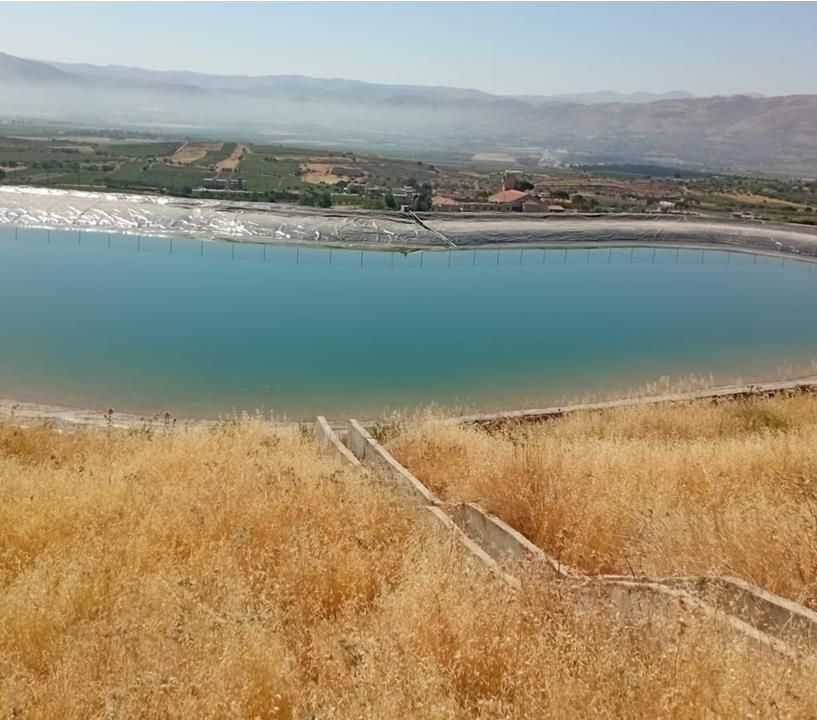
Water collection. At its organic-certified Rana vineyard, Château Ksara is building a reservoir capable of holding around 1,500 cubic metres of water for use during dry periods.
Grape variety adaptation. The winery is also reviewing its grape varieties for drought resilience. Mediterranean varieties such as Grenache, Cinsault, and Carignan are well suited to water stress, while Château Ksara is exploring a return to indigenous Lebanese varieties including Merwah and Obaideh. Varieties adapted to local conditions could reduce irrigation needs while reconnecting the vineyard with Lebanon’s viticultural heritage.
Where the industry stands
How prepared is the wine industry to take a more holistic approach to water?
Cristina Crava of the Porto Protocol was candid: “We still have a way to go.” But, optimistically, she's seeing progress and a lot of great practices already underway.
The Porto Protocol’s Saving Every Drop in Wine report compiles case studies from wine producers around the world, including several IWCA members. The examples range from biofilter systems and K-line vineyard design to water footprint assessments. Each case study includes an estimate of the effort and cost involved, as well as considerations for different winery sizes and climate conditions.
The ask and the goal? Marta Mendonça says: "We invite you to look at water as a system. We hope to bring it to the forefront of wine's impact, just as we do with carbon."
IWCA's Knowledge Exchange Seminars are closed-door webinars for member wineries, bringing together peers and industry experts to discuss sustainability challenges and opportunities across the wine trade. Learn more about IWCA membership here.


Comments